
How Does an Electric Door Strike Work?
Sep 5th 2017
Electric strikes are particularly used for door applications. They replace the fixed metal plate that contains holes used by the door bolt and is attached to a door jamb. Electric strikes close the door via the locking latch and possess a ramped surface. When the proper electrical signal is received, the surface of these strikes pivots away from the direction of the latch. It allows you to open the door from the outside without operating the door knob.
Configurations
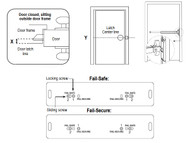
As you may already know, electric door strikes do not essentially secure doors as doors are secured by door lockset or handle. They are used to provide access control. These devices are primarily used in stairwell control, elevator control, fire exits, interior control, and perimeter control. They feature two configurations: fail-secure and fail-safe.
- Fail-Secure
Also referred to as fail-locked or non-fail safe, it is a configuration of electric strike that opens the door after receiving direct electric current. You can power a fail-secure electric strike via AC (alternating current) or DC (direct current). While the functionality of an electric strike is the same on both types of current, the main difference is the ‘buzz’ when the door is being opened. If a fail-secure electric strike is powered by AC, it makes a ‘buzz’ during door-opening operation. On the other hand, if it is powered by DC, then the operation is silent.
- Fail-Safe
In this configuration, the electric strike locks the door when electricity is applied. This type of configuration only operates via DC power.
Mechanism of Standard Mounted Electric Strike
Electric door strikes are available in a variety of styles nowadays. Recessed electrical strike mounted at the location parallel to the lock’s latch centerline and into the doorjamb is the standard style.
This standard electric door strike appears as a modified strike plate with an attached case and a strike lip. Rather than a fixed opening for the latch, a movable keeper or jaw is in the front of the strike faceplate. So when the door closes, the latch automatically slides along the strike's lip. As the latch slides over the moveable jaw, it retracts, and when the latch passes over the jaw it becomes trapped within the opening in the electric strike. The opening of the strike is approximately one-half of an inch so that it can accommodate the length of bolts/latch.
The straight edge of the extended latch cannot slide back over the jaw once the latch is within the opening. You can open the door in one of two ways i.e. electrically release the movable jaw or retract the latch by operating the lever/knob. When you release the electrical door strike remotely, the jaw tilts out of the way and the latch slides out in the extended condition and the door is opened.
The internal mechanism for the overall operation of an electric door strike varies from manufacturer to manufacturer. However, most electric strikes being manufactured these days are controlled by a solenoid that operates a mechanism that controls the keeper or jaw.